If your dog struggles on walks, every outing feels like a gamble — will today be a good day, or will the neighbor’s dog appear at exactly the wrong moment?
Good news! You have more control than you think. Before teaching new responses, start by reducing the frequency of reactions — trainers call this management.
Why reducing reactions matters
Each reaction takes a toll on your dog’s nervous system. As we discussed in Part 1, stress hormones can take hours or even days to return to baseline, making a dog more likely to react to subsequent triggers, even those they would normally ignore. Fewer reactions mean less accumulated stress, creating better conditions for learning.
Proactive management is a vacation for your dog’s nervous system (and yours, too). Living with a reactive dog can keep everyone on high alert, bracing for the next outburst. Reducing these moments gives you both a chance to decompress and return to training calmer and better equipped to succeed.
Management also prevents your dog from repeatedly rehearsing unwanted behaviors. Every bark, lunge, or growl strengthens the response, making it more automatic over time. Your dog doesn’t need to practice these behaviors for us to change them; preventing rehearsal while building new responses is the most effective way to replace an old habit with a new one.
Good behavior modification meets a dog where they are, gradually increasing difficulty as the dog’s skills develop. Think of it like getting back into physical shape: you wouldn’t start with a strenuous mountain hike before building your endurance. Push too hard too soon, and you risk a setback. Reactive dogs are no different. With time and practice, they can learn to work in more difficult situations with less intervention, but that progress is harder to achieve when they’re repeatedly pushed beyond what they can handle.
Ready to dig in? Schedule a private lesson with one of our experienced trainers.
Management isn’t forever
Reading through the strategies below, it might feel like a lot. Take a deep breath! You don’t need to do all of these, and you won’t need to do them forever.
Management can sometimes feel like you’re avoiding the problem, but it’s actually laying the groundwork for training to be effective. Over time, your dog will level up in the situations they can navigate without reactions. As they do, you’ll be able to gradually take on more challenging environments, and much of the management you use now will no longer be necessary. Management isn’t the destination; it’s one step on the path toward your goals.
Start with one or two changes that feel easiest and most relevant to your household. These strategies are designed to offer some of the quickest, easiest solutions to common pain points.
Ready to dig in? Schedule a private lesson with one of our experienced trainers.
reducing reactions at home
For many dogs, a large share of reactions happen without ever leaving the house. A dog who spends the day barking at passersby from the front window is getting a lot of practice at the very behavior we are trying to change. Fortunately, the home is also where you have the most control. By reducing likely reaction-producing scenarios, we can help prevent unnecessary stress from accumulating in our dogs throughout the day.

Frosted window film reduces visual stimuli and adds privacy without blocking out the light.
Frosted window film: Applying temporary frosted film to the lower half of windows that face the street or front walk blocks your dog’s view of passing dogs, people, and delivery drivers while still letting light in. This style of management is sometimes called “antecedent arrangement,” or arranging what comes before the behavior.
Visual barriers in the yard: Tarps or a fence privacy screen can reduce the number of visual triggers along a fence line. Even if you can’t block everything, there will be fewer triggers to worry about. An exercise pen or chicken wire can also serve as a temporary buffer to keep your dog back from a shared fence.
Sound masking: A fan, white noise machine, or background TV or music can muffle outside sounds like barking dogs, car doors, and jingling tags. You may need to experiment with the volume to find what works for your dog.
Leashed potty breaks: If your dog tends to charge the fence or bark at neighbor dogs in the yard, take them out on leash for now, and coordinate with your neighbors when possible so your dogs aren’t outside at the same time. You won’t miss trying to wrangle a barking, fence-fighting dog in your pajamas.
Ready to dig in? Schedule a private lesson with one of our experienced trainers.
reducing reactions in the car
Not every dog will need management at home or in the car, but we’ve included strategies for both common trigger contexts in case they’re relevant to your dog.
Cover the crate: If your dog rides in a crate, a crate cover, blanket, or sheet draped over the sides blocks their view of the outside world. Many dogs settle more easily with a little privacy, and some will simply lie down and rest once there’s nothing to watch.
Block the windows: Window shades in the rear windows reduce what your dog can see while the car is moving. A car shade like reflective aluminet can cover the entire car while it’s parked (with the added bonus of keeping the car cooler). Aluminet is particularly popular with the dog sports crowd.
Try a calming cap: A calming cap is a lightweight, sheer mask that fits over your dog’s eyes and softens their view. Your dog can still see shapes and light, but moving dogs and people become much less striking. Introduce it gradually and pair it with treats at home before using it on a drive, so the cap becomes a predictor of good things.
Pack a chew: A stuffed Kong or other long-lasting chew gives your dog something to do with their mouth besides bark, and can help them recenter after a busy outing.
Park with care: When you arrive somewhere, park facing away from walkways and entrances where you can, so your dog isn’t watching triggers come and go while they wait.
For many dogs, the car eventually becomes a safe place to decompress between activities, but it often takes a little management to get there.
reducing reactions on walks
Out in the world, you won’t be able to control everything, but you can stack the deck in your dog’s favor.
Consider your timing and route: Walking at quieter times of day or choosing routes with fewer passersby can dramatically reduce the number of encounters. You may also find it helpful to drive to a quieter area rather than walking straight out your front door.
Use what’s around you: Parked cars, trees, bushes, and buildings can all serve as visual barriers. Stepping behind a car or crossing the street to let another dog pass can sometimes be enough to keep your dog under threshold.
Rehearse your exit strategy: One or two well-rehearsed trained behaviors can get you out of a tight spot, and even turn a trigger’s appearance into a net positive training opportunity. (More on this in Part 3).
Bring the good stuff: Ordinary kibble usually can’t compete with the strong feelings your dog has about their triggers. Carry top-shelf treats like real chicken or turkey, bacon, or canned dog food in a squeeze tube.
A few questions to ask yourself before heading out:
How much room will I have? Wide trails, open fields, and quiet parking lots give you space to move away or see a trigger coming from a distance. Narrow paths, hallways, and sidewalks lined with fences can leave you surprised with nowhere to go.
How predictable is this place? Dog parks, popular trailheads, and pet stores on a Saturday are full of things you can’t control.
Is this a busy time of day? A quiet park on a weekday morning is a very different experience than the same park on a sunny weekend afternoon. Your neighborhood might be a minefield just before and after work hours, when neighbors are trying to fit in their daily activities and chores.
What will I do if a trigger appears? Know in advance which way you will turn, where you can step off the path, and how you’ll get back to the car.
Is today a “good” day? Consider everything else your dog has dealt with recently. If they had a vet visit yesterday, a houseful of guests, or a reaction earlier in the day, it may be a better day for a quiet outing or for staying home.
Ready to dig in? Schedule a private lesson with one of our experienced trainers.
decompression is important
Management isn’t only about avoiding triggers. It’s also about giving your dog’s nervous system time to recover and making sure their needs are met in ways that don’t involve passing a dozen dogs. On days when your dog is struggling, or you are short on time or energy, you don’t have to walk the usual route (or walk at all).
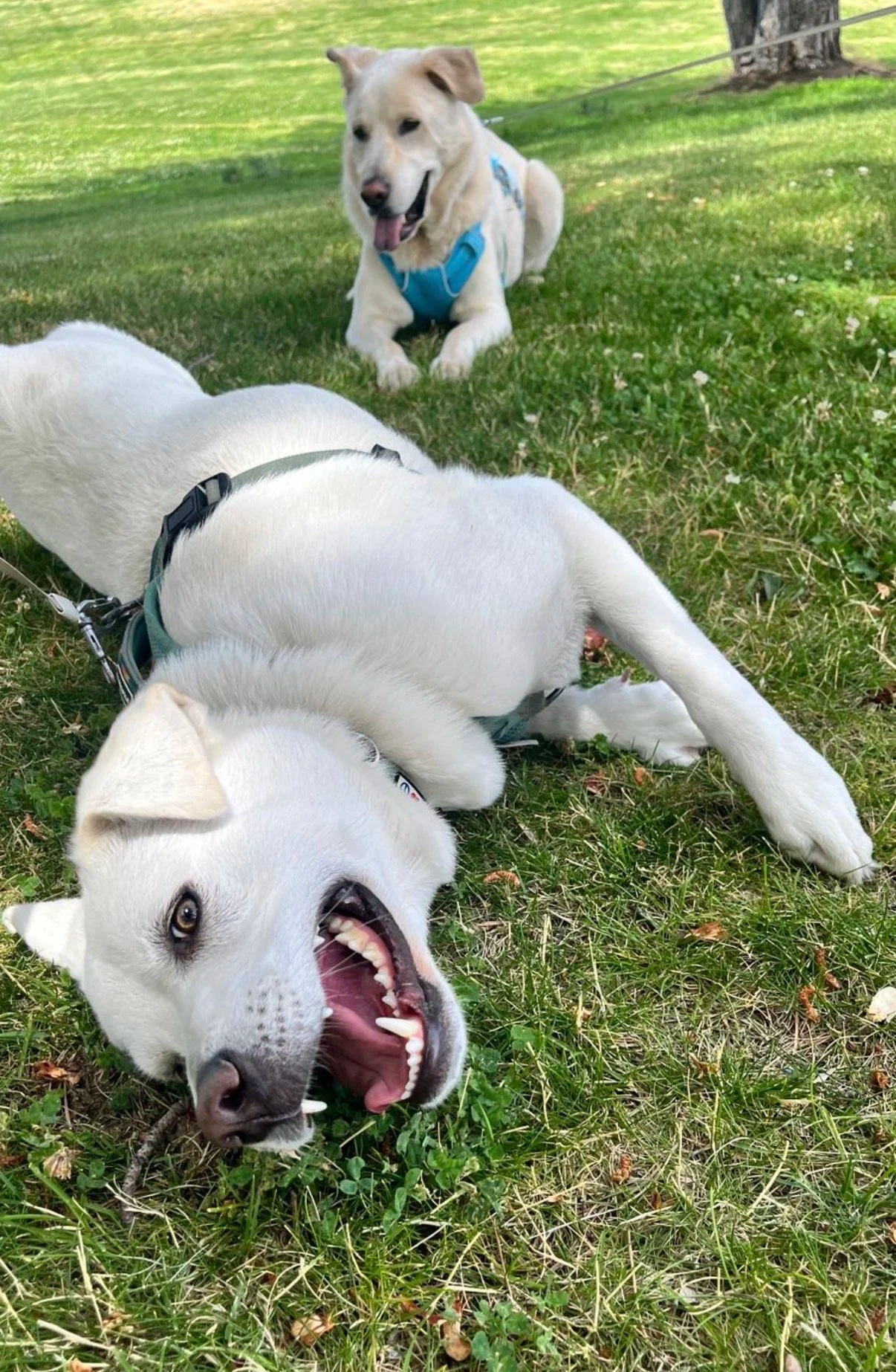
Sniffaris: Find a quiet place for your dog to range to the end of a longer leash and sniff and explore without any expectation that they keep the leash loose. Sniffing is calming for many dogs, and a slow sniffy walk in a chill environment can be invaluable for your dog’s decompression.
Training games: Training, even a “silly” new trick, is a brain workout and social activity with you. Training together will tire your dog out and strengthen their ability to stay engaged with you, both at home and out and about.
Enrichment at home: Food puzzles, stuffed Kongs, and long-lasting chews give your dog the chance to fulfill their natural foraging, chewing, and prey-dissecting needs. Even scattering kibble on a high-pile rug or in the grass can provide more stimulation than feeding from a bowl.
Private spaces: Renting a private yard (such as through SniffSpot) gives your dog a chance to run and explore with no surprise encounters.
Rest days: After a big day or a reaction, a quiet day or two at home can help your dog’s stress levels come back down and provide them with the bandwidth they need to be successful. This is your official notice that you have permission to NOT walk your dog. There are plenty of other ways to meet their needs, and quiet days will sometimes be exactly the thing.
It’s also worth checking in on the basics. A dog who is hungry, overtired, needs a potty break, or hasn’t had enough exercise or enrichment is going to have a harder time coping with a trigger than a dog whose needs have been met.
Ready to dig in? Schedule a private lesson with one of our experienced trainers.
Advocating for your dog
Part of keeping your dog under threshold is managing the humans around you. It is completely okay to say “no thank you” when someone asks to pet your dog or bring their dog over to say hi, to cross the street without explanation, or to leave a situation early. You know your dog best, and your job is to keep them feeling safe, not to keep everyone else comfortable.
This can be easier said than done. There is a lot of social pressure to allow a greeting, even if we have a hunch it may not end well. Turning down the request can feel rude. Rehearsing your “no thank you” script outside of a real-life situation will make your responses more fluid, automatic, and effective. My go-to is a simple, “Not right now, thank you for asking,” while I turn to feed my dog as we walk away.
When to get help
If your dog is over threshold frequently throughout a typical week, you are having a hard time figuring out ways to implement management strategies like the ones listed here, or your training seems to have plateaued, it may be time to seek out the help of a qualified professional.
You don’t have to figure all of this out alone. A trainer can help you identify your dog’s triggers, spot patterns you may be missing, and put together a plan for training and management that fits your home, your neighborhood, and your dog.
Ready to dig in? Schedule a private lesson with one of our experienced trainers.
Coming up in Part 3: What to do when your dog is reacting
Now that you have some tools for immediately reducing your dog’s reactions, join us for Part 3, where we discuss how to respond in the moment when a reaction does happen.